
Project Description
The building doesn’t wait for you to walk inside. It starts the conversation on the street.
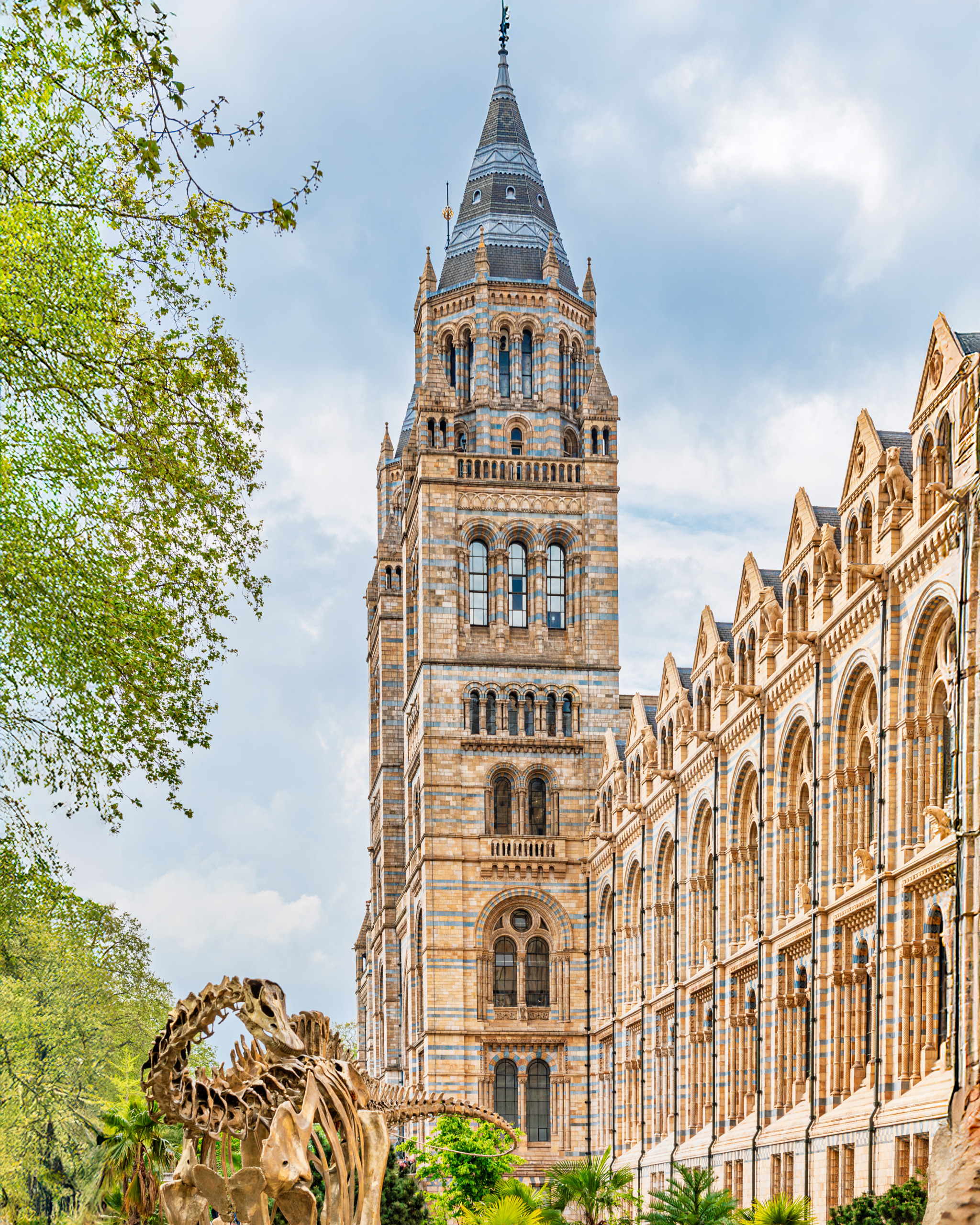
Alfred Waterhouse’s Natural History Museum in London, opened in 1881, is one of the great statements of Victorian civic architecture. The facade along Cromwell Road is Romanesque in structure — layered arcades, deeply recessed round arches, alternating bands of buff and blue-grey terracotta — but the detail is something else entirely. Carved panels of animals and plants animate nearly every surface, turning what could have been pure monumentality into an elaborate celebration of the natural world. The building is, quite literally, covered in its own subject matter.
The central tower anchors the composition and announces itself with the confidence of an institution that knew exactly what it was for. Thick walls and emphatic repetition project permanence and authority. The intricate terracotta work projects curiosity and wonder. Both things are true at once, and the tension between them is exactly what makes this facade so compelling.
Victorian architecture at its most purposeful. Science made stone.